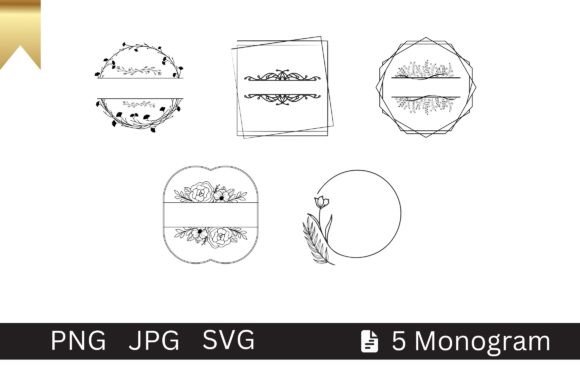
Kitchen Monogram SVG: A Designer's Take on Custom Home Goods
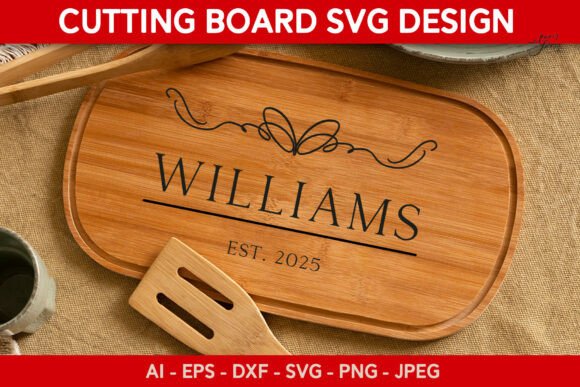
When I first pulled up the Kitchen Monogram SVG on my screen, my immediate reaction wasn't just about the aesthetic; it was about potential. As a designer who spends half their life staring at vector paths and the other half wrestling with thread tension, I look for files that bridge the gap between digital precision and tactile reality. This design, categorized under Crafts and Graphics, presents itself as a tool for elegance, but the real question is how it translates from a laser-cutting template to a stitched handmade product.
The visual personality of this file is clean and structured. It carries a mood of domestic sophistication, perfect for the current trend of personalized home goods. The lines appear crisp, which is essential when you are converting a vector meant for CNC routing or vinyl cutting into a machine embroidery design. In my line of work, a "clean" vector often means fewer node headaches when digitizing, but it also sets a high bar for the final stitch output. If the digital lines are this sharp, the embroidery needs to match that clarity to maintain the intended value.
From Vector to Stitch: Real-World Application
I recently had a client request a set of coordinated items for a housewarming gift: a heavy canvas tote, a linen apron, and a textured tea towel. They wanted something that felt boutique but not overly fussy. This is where the Kitchen Monogram SVG shines as a foundational asset. While the product description highlights its use for cutting boards, my mind immediately went to custom apparel and soft goods.
For the apron, I envisioned using the monogram as a central focal point. Because the design relies on family names, the typography is key. In a real stitching scenario, you have to consider how those letters will fill. Will you use a dense fill stitch for a solid, modern look, or a classic satin stitch for a traditional sheen? The simplicity of the SVG allows for flexibility here. On the canvas tote, a thicker thread weight with a slightly lower stitch density could give a rugged, artisanal feel. Conversely, on the fine linen of the tea towel, the design would need to be scaled down, requiring careful attention to detail to ensure the thin lines don't get lost in the fabric weave.
This versatility makes it a strong candidate for Etsy sellers and small shop products looking to expand their catalog without creating entirely new designs from scratch. By adapting one core graphic across different materials, you create brand consistency. Whether it's a sweatshirt embroidery project for a cozy winter market or a delicate baby embroidery item for a nursery, the underlying structure of the monogram holds up, provided the digitization respects the original vector's integrity.
Navigating Fabric Textures and Hoop Constraints
However, enthusiasm must be tempered with technical realism. Not every surface is ready for this design. When working with textured fabrics like waffle-weave towels or thick terrycloth, the clean lines of the Kitchen Monogram SVG can struggle. The peaks and valleys of the fabric can distort small details, making tiny lettering look jagged or disconnected. In these cases, I always advise testing on scrap fabric first. You might need to adjust your stabilizer strategy—perhaps using a cut-away stabilizer instead of tear-away to provide enough support for the stitches to sit flat and true.
Another consideration is the hoop size. If you are planning to place this on a curved surface like a cap or a small corner of a potholder, you need to verify the dimensions before you start hooping. While the vector is scalable, embroidery has physical limits. Compressing a long family name into a small hoop size can lead to overcrowding, where the thread colors bleed into each other visually, even if they are technically distinct. For dark fabrics, the contrast becomes critical. A light-colored thread on a navy background looks stunning in a printable mockup, but in person, you need enough stitch coverage to prevent the fabric from peeking through and ruining the legibility.
Enhancing Product Value and Customer Trust
The ultimate goal of using a design like this is to elevate the perceived value of the finished product. A well-executed monogram tells the customer that care was taken. It transforms a generic kitchen towel into a personalized gift that feels exclusive. For commercial embroidery projects, this distinction is what allows you to charge a premium. Customers aren't just buying a towel; they are buying the recognition of their family name presented beautifully.
Furthermore, the professional look of the design aids in marketing. When you create design assets for your online store, having a graphic that looks good in both color and black-and-white previews is invaluable. It allows you to showcase the design on various backgrounds without needing multiple photoshoots. This efficiency is crucial for creative entrepreneurs who need to move fast during peak seasons like holiday embroidery rushes or wedding seasons.
Final Designer Notes for Execution
Before you commit to production, there are a few housekeeping items to address. First, confirm the licensing terms. Just because a file is available for purchase doesn't automatically grant unlimited commercial embroidery rights. Ensure you are cleared to sell finished items or digital derivatives. Second, pay close attention to the transition points in the letters. If you are digitizing this yourself from the SVG, smooth out any sharp corners that might cause thread breaks or bird nests.
Test your thread color combinations rigorously. What looks vibrant on screen might clash or disappear on specific fabric textures. Try running the design on both light and dark backgrounds to see how the shadow and highlight effects play out. Finally, consider the end-user experience. If this is going on an item that needs frequent washing, like an apron or kitchen towel, ensure your stitch count and density are robust enough to withstand laundering without puckering or fraying.
In conclusion, the Kitchen Monogram SVG is more than just a cutting file; it is a versatile foundation for a wide range of embroidery projects. With thoughtful adaptation to fabric types, careful attention to stitch techniques, and a strategic approach to product placement, it can become a staple in your repertoire of craft business essentials. It invites the maker to blend digital precision with the warmth of handcrafted goods, resulting in products that customers love to give and receive.